
- how to get rid of dandruff, best anti dandruff shampoo, itchy scalp remedies, oily scalp treatment
- Struggling with embarrassing white flakes and stubborn scalp itchiness? Read our comprehensive professional guide to identifying your dandruff type and curing it permanently.
The Science Behind Dandruff: Why Is Your Scalp Flaking?
Few hair conditions are as frustrating or damaging to personal confidence as chronic dandruff. The appearance of white flakes on your shoulders is accompanied by an uncomfortable, persistent itch. To effectively learn how to get rid of dandruff, you must understand what is happening at the cellular level.
Dandruff is primarily caused by an overgrowth of a naturally occurring microscopic fungus called Malassezia, which resides on everyone’s scalp. This fungus feeds on sebum (the natural oils produced by your hair follicles). When your scalp produces too much oil, Malassezia thrives, breaking the sebum down into oleic acid. If your skin is sensitive to this acid, it responds by accelerating cell turnover—causing dead skin cells to clump together and shed rapidly as visible flakes.
Excess Sebum Production ➔ Malassezia Fungus Overgrowth ➔ Scalp Inflammation ➔ Rapid Cell Shedding (Dandruff Flaking)
Dry Scalp vs. Oily Dandruff: What’s the Difference?
Treating dandruff correctly requires diagnosing your specific type:
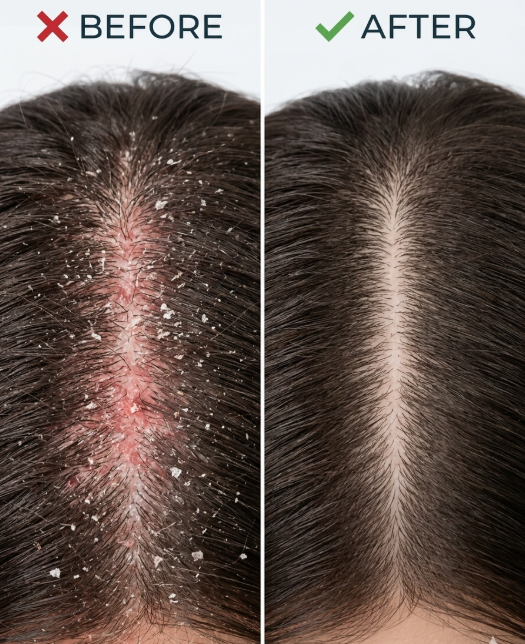
- Dry Scalp Flakes: These flakes are typically small, white, and dry. They drop easily from the hair and are caused by a lack of moisture, cold weather, or harsh chemicals.
- Oily Dandruff (Seborrheic Dermatitis): These flakes are larger, yellowish, and feel waxy or greasy. They tend to stick to the hair shafts and scalp due to excess oil production, and are heavily associated with redness and intense itching.
How to Treat and Balance an Oily, Flaky Scalp
Using standard moisture shampoos on an oily dandruff condition will worsen the problem by adding unnecessary weight. Conversely, using highly stripping clarifying products will trigger the scalp to produce even more oil in self-defense. You must implement a routine that regulates sebum without compromising hydration.
The Power of Sebum Regulation
To clear away greasy flakes and calm an itchy scalp, your hair routine requires a balancing act. You need ingredients that clarify the skin surface while soothing the underlying dermal layer.
- The LookWell Recommendation: Use Kérastase Specifique Bain Divalent Shampoo. This specialized dual-action shampoo is engineered specifically for oily roots and sensitized, dry lengths. It regulates the overproduction of sebum at the root while purifying the scalp surface. It leaves the hair fiber soft, ensuring that your ends do not get dry while treating your oily scalp issues.
The Importance of Avoiding Scalp Buildup
Many people try to mask an itchy scalp by layering heavy oils like coconut or mustard oil over the flakes. This provides a temporary soothing sensation but feeds the Malassezia fungus, making the dandruff more severe over time. Avoid heavy oiling when dealing with an active dandruff flare-up. Instead, focus on lightweight, water-based, or salicylic-acid-driven scalp treatments.
4 Crucial Habits to Maintain a Flake-Free Scalp
- Wash Your Hair Regularly: If you have an oily scalp, washing every alternate day is essential to prevent sebum buildup.
- Watch the Water Temperature: Avoid washing your hair with hot water. Lukewarm water is ideal, as hot water strips moisture and induces inflammation.
- Clean Your Hair Tools: Sanitize your combs, brushes, and pillowcases frequently to avoid re-introducing fungal spores to a clean scalp.
- Incorporate Professional Care: Ditch basic over-the-counter options that leave hair feeling straw-like.
If you are ready to put an end to recurring scalp irritation, it is time to upgrade to professional hair care solutions. Discover targeted, salon-tested treatments by visiting the LookWell eSHOP Scalp Care Range today and experience the difference a healthy, balanced scalp makes.