Posted on — Leave a comment

The Ultimate Restoration Guide for Chemically Treated & Damaged Hair

  • how to repair damaged hair, best hair mask for dry hair, keratin treated hair care, sulfate free shampoo benefits
  • Is your hair dry, brittle, and snapping after a color or keratin treatment? Discover the ultimate professional routine to repair damaged bonds and restore brilliant shine.

The Anatomy of Hair Damage: What Happens During Chemical Processing?

From vibrant balayage colors to sleek chemical straightening and keratin treatments, altering our hair structure allows us to express our personal style. However, these transformation processes alter the delicate internal architecture of the hair strand.

To alter the shape or color of a hair strand, chemical treatments must force open the protective outer layer called the cuticle. Once the cuticle is breached, chemicals enter the inner core (the cortex), breaking down disulfide bonds and stripping away essential structural lipids like 18-MEA.

If the hair is not properly cared for after these treatments, the cuticles remain permanently raised and open. This allows internal moisture to evaporate rapidly, leading to the classic symptoms of structural hair damage:

  • Extreme texture dryness and rough texture
  • Porous strands that tangle easily and form tight knots
  • A complete lack of natural shine or elasticity
  • Split ends and hair snapping off mid-shaft during gentle combing

Rebuilding Damaged Hair: The Critical Protein-Moisture Balance

You cannot simply “wash away” physical hair damage with a basic shampoo. Repairing structurally compromised hair requires a highly targeted approach that delivers both intense structural protein (to rebuild internal bonds) and deep moisture lipids (to seal the open cuticles).

[Open Cuticle & Broken Bonds] ➔ [Infuse Keratin & Micro-Lipids] ➔ [Sealed Cuticle & Restored Elasticity]

Why Aftercare Dictates the Lifespan of Your Salon Treatment

If you have recently invested in a smoothing or keratin service, the products you use at home will determine how long that sleek look lasts. Regular drugstore shampoos contain Sodium Lauryl Sulfate (SLS) or Sodium Laureth Sulfate (SLES). These harsh surfactants act like detergents, stripping away the expensive protective coating applied during your salon service within a few washes.

  • The LookWell Recommendation for Post-Treatment Care: To maintain the longevity of your smoothing service, switch exclusively to L’Oréal Professional Xtenso Care Sulfate Free Shampoo or BG Botoliss Biotin Shampoo. These formulas cleanse without stripping, coating the hair in a protective veil that locks in your treatment.
  • The Deep Conditioning Solution: At least once a week, swap out your standard conditioner for a high-performance deep conditioning mask. BG Botoliss Biotin Hair Mask or Naturica Repairing Deep Mask work by penetrating deep into the porous gaps of the cortex, replenishing lost proteins and smoothing down raised cuticles for an instant, reflective shine.

The Crucial Role of Hair Oils and Serums

Damaged hair lacks a natural lipid shield, leaving it highly vulnerable to environmental moisture loss and friction damage from rough fabrics like cotton pillowcases. Applying a premium botanical oil blend acts as a synthetic lipid barrier, locking in hydration all day long.

  • The LookWell Recommendation: Apply a few drops of Rica Opuntia Oil Treatment to the mid-lengths and ends of damp hair. Infused with prickly pear extract, it delivers multi-layered UV protection, exceptional heat resistance, and intense smoothness without weighing down fine hair textures.

Protect Your Investment with Professional Hair Care

Your hair is an investment you wear every single day. While chemical processes can induce structural damage, the right professional aftercare routine can completely reverse the appearance of distress, returning your hair to a soft, bouncy, and radiant state.

Stop letting dry, brittle strands compromise your style. Upgrade your daily routine with authentic, salon-approved repair systems available directly at LookWell eSHOP Damaged Hair Repair Solutions and bring your hair back to life.
Posted on — Leave a comment

The Definitive Guide to Eliminating Dandruff & Scalp Irritation

  • how to get rid of dandruff, best anti dandruff shampoo, itchy scalp remedies, oily scalp treatment
  • Struggling with embarrassing white flakes and stubborn scalp itchiness? Read our comprehensive professional guide to identifying your dandruff type and curing it permanently.

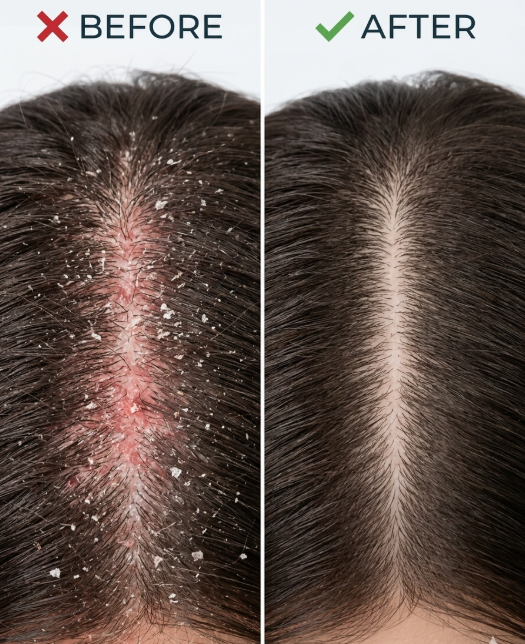
The Science Behind Dandruff: Why Is Your Scalp Flaking?

Few hair conditions are as frustrating or damaging to personal confidence as chronic dandruff. The appearance of white flakes on your shoulders is accompanied by an uncomfortable, persistent itch. To effectively learn how to get rid of dandruff, you must understand what is happening at the cellular level.

Dandruff is primarily caused by an overgrowth of a naturally occurring microscopic fungus called Malassezia, which resides on everyone’s scalp. This fungus feeds on sebum (the natural oils produced by your hair follicles). When your scalp produces too much oil, Malassezia thrives, breaking the sebum down into oleic acid. If your skin is sensitive to this acid, it responds by accelerating cell turnover—causing dead skin cells to clump together and shed rapidly as visible flakes.

Excess Sebum Production ➔ Malassezia Fungus Overgrowth ➔ Scalp Inflammation ➔ Rapid Cell Shedding (Dandruff Flaking)

Dry Scalp vs. Oily Dandruff: What’s the Difference?

Treating dandruff correctly requires diagnosing your specific type:

  • Dry Scalp Flakes: These flakes are typically small, white, and dry. They drop easily from the hair and are caused by a lack of moisture, cold weather, or harsh chemicals.
  • Oily Dandruff (Seborrheic Dermatitis): These flakes are larger, yellowish, and feel waxy or greasy. They tend to stick to the hair shafts and scalp due to excess oil production, and are heavily associated with redness and intense itching.

How to Treat and Balance an Oily, Flaky Scalp

Using standard moisture shampoos on an oily dandruff condition will worsen the problem by adding unnecessary weight. Conversely, using highly stripping clarifying products will trigger the scalp to produce even more oil in self-defense. You must implement a routine that regulates sebum without compromising hydration.

The Power of Sebum Regulation

To clear away greasy flakes and calm an itchy scalp, your hair routine requires a balancing act. You need ingredients that clarify the skin surface while soothing the underlying dermal layer.

  • The LookWell Recommendation: Use Kérastase Specifique Bain Divalent Shampoo. This specialized dual-action shampoo is engineered specifically for oily roots and sensitized, dry lengths. It regulates the overproduction of sebum at the root while purifying the scalp surface. It leaves the hair fiber soft, ensuring that your ends do not get dry while treating your oily scalp issues.

The Importance of Avoiding Scalp Buildup

Many people try to mask an itchy scalp by layering heavy oils like coconut or mustard oil over the flakes. This provides a temporary soothing sensation but feeds the Malassezia fungus, making the dandruff more severe over time. Avoid heavy oiling when dealing with an active dandruff flare-up. Instead, focus on lightweight, water-based, or salicylic-acid-driven scalp treatments.


4 Crucial Habits to Maintain a Flake-Free Scalp

  • Wash Your Hair Regularly: If you have an oily scalp, washing every alternate day is essential to prevent sebum buildup.
  • Watch the Water Temperature: Avoid washing your hair with hot water. Lukewarm water is ideal, as hot water strips moisture and induces inflammation.
  • Clean Your Hair Tools: Sanitize your combs, brushes, and pillowcases frequently to avoid re-introducing fungal spores to a clean scalp.
  • Incorporate Professional Care: Ditch basic over-the-counter options that leave hair feeling straw-like.

If you are ready to put an end to recurring scalp irritation, it is time to upgrade to professional hair care solutions. Discover targeted, salon-tested treatments by visiting the LookWell eSHOP Scalp Care Range today and experience the difference a healthy, balanced scalp makes.


Posted on — Leave a comment

The Ultimate Guide to Stopping Hair Fall & Thinning

How to stop hair fall, best shampoo for hair thinning, professional hair loss treatment, hair fall control tips

Understanding Hair Fall: Is It Normal Breakage or Follicular Thinning?

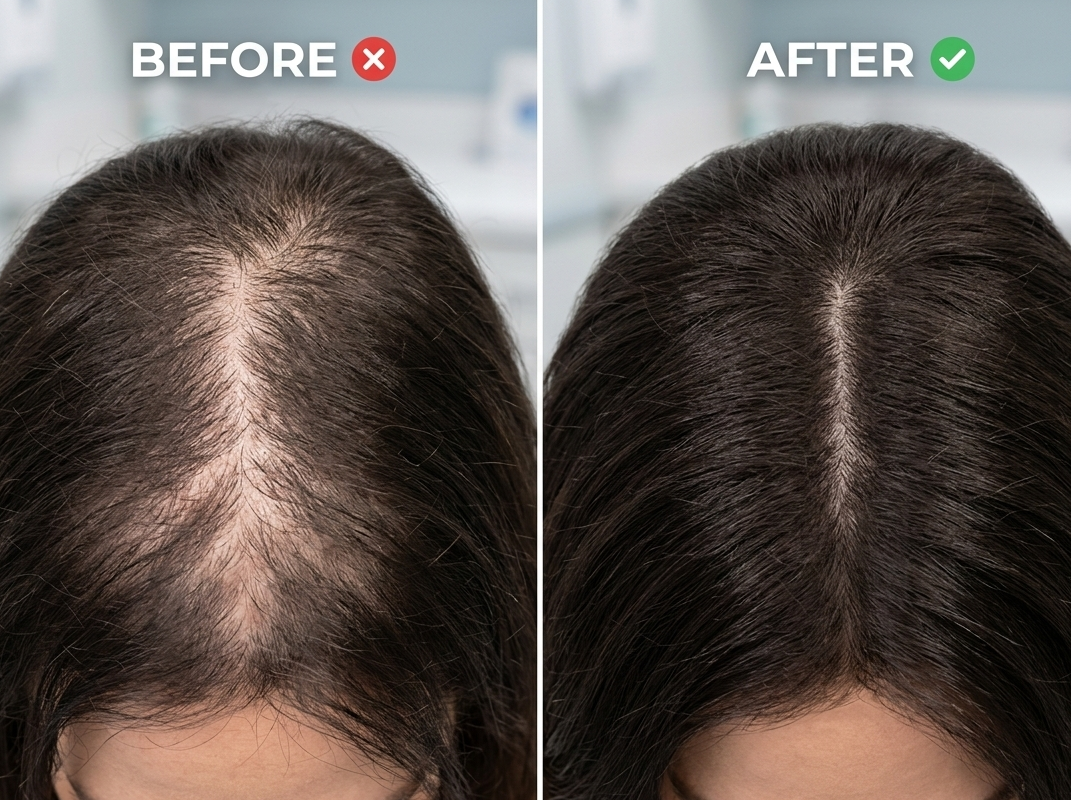
Every individual sheds between 50 to 100 strands of hair a day as part of the natural hair growth cycle. However, when you start noticing excessive hair in your shower drain, clumps on your hairbrush, or visible patches on your scalp, it transitions into an actual hair health concern.

Before searching for how to stop hair fall, you must understand the distinction between hair breakage and hair thinning. Hair breakage happens when the hair shaft is weak, dry, or chemically damaged, causing it to snap mid-way. Hair thinning or follicular hair loss happens directly at the scalp level, where the hair follicle shrinks, weakens, and prematurely enters the shedding phase (telogen phase).

The Root Causes of Excessive Hair Loss

  1. Hormonal Imbalances: Changes in hormones due to thyroid issues, stress, or genetics (like Androgenetic Alopecia) can severely impact hair density.
  2. Environmental Stressors & Pollution: Microscopic pollution particles build up on the scalp, clogging hair follicles and suffocating the roots.
  3. Nutritional Deficiencies: A lack of essential biological proteins, iron, biotin, and vitamins starves the hair bulb of the blood circulation it needs to thrive.
  4. Chemical and Mechanical Stress: Over-processing hair with bleach or using high-heat tools without thermal protection destroys the hair’s outer cuticle structure.

Step-by-Step Professional Routine to Regrow Thicker Hair

Relying purely on home remedies like oiling often falls short when dealing with severe hair thinning. To yield measurable results, you must transition to clinical, professional-grade hair care systems that address both the scalp environment and the hair fiber structure.

[Healthy Scalp System] ➔ [Strengthened Hair Fiber] ➔ [Reduced Hair Fall]

Step 1: Cleanse with an Anti-Hair Fall Shampoo

Standard commercial shampoos often contain harsh sulfates that strip the scalp of its protective lipid barrier, leading to further inflammation. You require an advanced formula engineered to reinforce weakened hair fibers while thoroughly cleansing the scalp.

  • The LookWell Recommendation: Switch to Kérastase Genesis Bain Hydra-Fortifiant Shampoo. This professional shampoo is specifically formulated for fine or greasy hair prone to falling due to breakage. It gently eliminates sebum and pollution particles while reinforcing the hair fiber to minimize the risk of hair fall.

Step 2: Revitalize the Hair Follicles with Scalp Treatments

Shampooing cleanses the surface, but targeted treatments treat the root. Applying localized ampoules or shock-treatments directly to the scalp delivers concentrated active ingredients like Aminexil, ginger root extract, and amine complexes directly to the compromised hair roots.

  • The LookWell Recommendation: For intense shedding periods, use Kérastase Genesis Ampoules Cure Anti-Chute Fortifiantes. Used daily for a 6-week period, these ampoules significantly anchor the hair follicle into the scalp and slow down the shedding process. Alternatively, the Naturica Energizing Miracle Shock Treatment utilizes natural Mediterranean ingredients to stimulate microcirculation around the roots, waking up dormant hair follicles.

Comparison: Anti-Hair Fall Solutions for Different Hair Types


Product NamePrimary Concern AddressedKey Active IngredientsIdeal Hair Type
Kérastase Genesis Bain Hydra-FortifiantHair fall from breakageGinger Root, Edelweiss Native CellsFine, normal, or oily hair
Kérastase Genesis AmpoulesFollicular shedding & thinningAminexil 1.5%, Caffeine, ArginineAll scalp types experiencing loss
Naturica Energizing Miracle ShockWeak hair roots & slow growthCapsicum extract, Vitamin A, B, C, EThin, fragile, or slow-growing hair

The Verdict: Consistency is Key

Reversing hair thinning requires patience. Because the hair growth cycle operates in phases, you will typically notice a drastic reduction in hair fall within 3 to 4 weeks of starting a professional regime, with new, thicker baby hairs emerging around the 3-month mark.

Don’t wait until your hair thinning becomes noticeably visible. Invest in salon-grade formulas to restore your hair’s natural vitality today. Explore our complete collection of verified, authentic hair retention systems on the LookWell eSHOP Hair Loss Collection and take your first step toward healthier, voluminous hair.

Posted on — Leave a comment

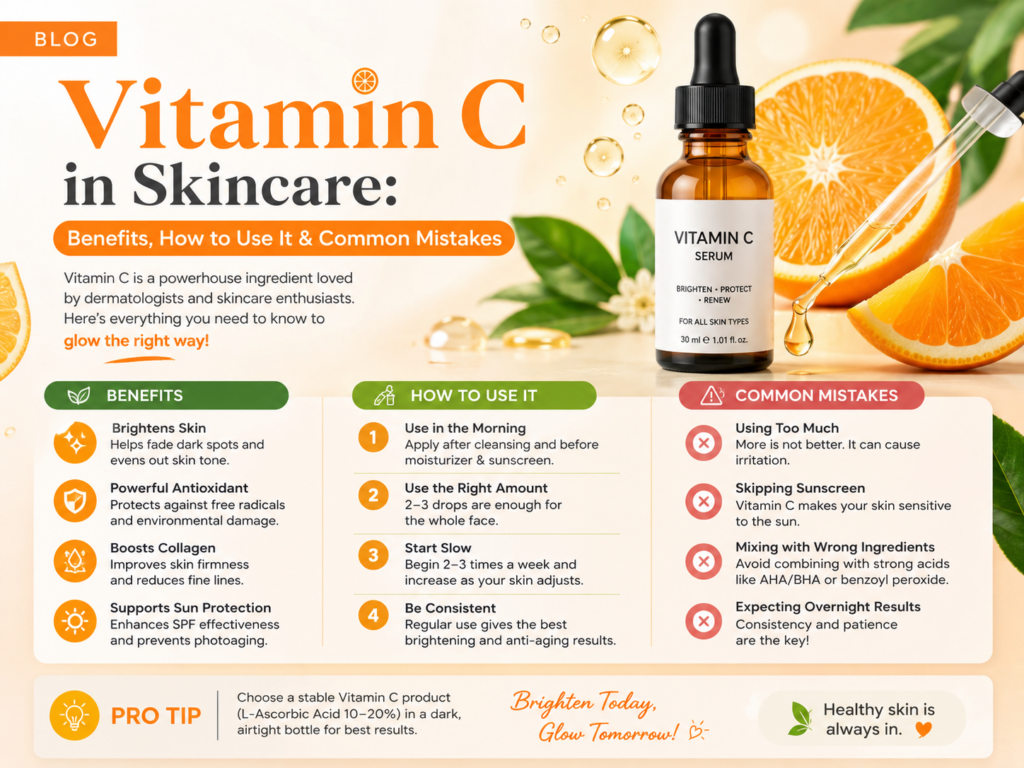
Vitamin C in Skincare: Benefits, How to Use It & Common Mistakes

Vitamin C in Skincare: Benefits, How to Use It & Common Mistakes | LookWell

The best approached by understanding the skin concern first. Skin can be oily, dry, dehydrated, sensitive, pigmented, dull or showing signs of ageing, and one routine is unlikely to suit every combination.A simple skincare framework is cleanse, treat, moisturise and protect. The exact products and order can change according to the concern, active ingredients and tolerance of your skin.

More products do not automatically mean better results. For acne-prone or oily skin, avoid the assumption that aggressive cleansing is always better. Over-cleansing can leave skin uncomfortable and may make a routine harder to tolerate. A balanced cleanser and appropriate hydration can be more practical. For pigmentation and uneven tone, daily sun protection is foundational. Brightening or renewal products can be considered alongside sunscreen, but realistic expectations matter: pigmentation often changes gradually and persistent or changing lesions should be assessed by a dermatologist. For dry, dehydrated or sensitive skin, barrier support becomes especially important. Hydrating ingredients, moisturisers and gentle cleansing can help maintain comfort. When using stronger actives, introducing them gradually and monitoring tolerance is sensible. LookWell’s current catalogue includes skin products organised around concerns such as acne, ageing, brightening, dark circles, dehydration, lack of glow, oily skin, pigmentation, sensitive skin and dryness. That makes a concern-led editorial strategy especially useful for the eSHOP. Skincare should be evidence-aware. Cosmetic products can support hydration, texture, radiance and the appearance of specific concerns, but they are not a substitute for diagnosis or medical treatment when a condition needs professional care.

A Practical Routine

  1. Cleanse without unnecessarily stripping the skin.
  2. Use one targeted serum or treatment that matches the main concern.
  3. Moisturise according to your skin’s hydration and barrier needs.
  4. Use broad-spectrum sunscreen during the day and reapply during prolonged outdoor exposure.
  5. Introduce new actives gradually and stop if persistent irritation develops.

Recommended LookWell Products

Who Should Seek Professional Advice?

Consider professional assessment when a concern is sudden, persistent, severe, painful, inflamed, rapidly worsening or associated with other unusual symptoms. The goal is to identify the cause instead of repeatedly changing products without a clear diagnosis.

FAQ

What is the first step for vitamin c skincare?

Start by identifying the specific concern and keeping the routine simple enough to monitor how your skin or hair responds.

How many products do I need?

Usually fewer well-chosen products are easier to use consistently than a large routine with overlapping functions.

Can professional products replace medical treatment?

No. They can support cosmetic care, but medical conditions require appropriate professional assessment and treatment.

CTA

Explore LookWell eSHOP and choose professional products according to your specific concern.

Posted on — Leave a comment

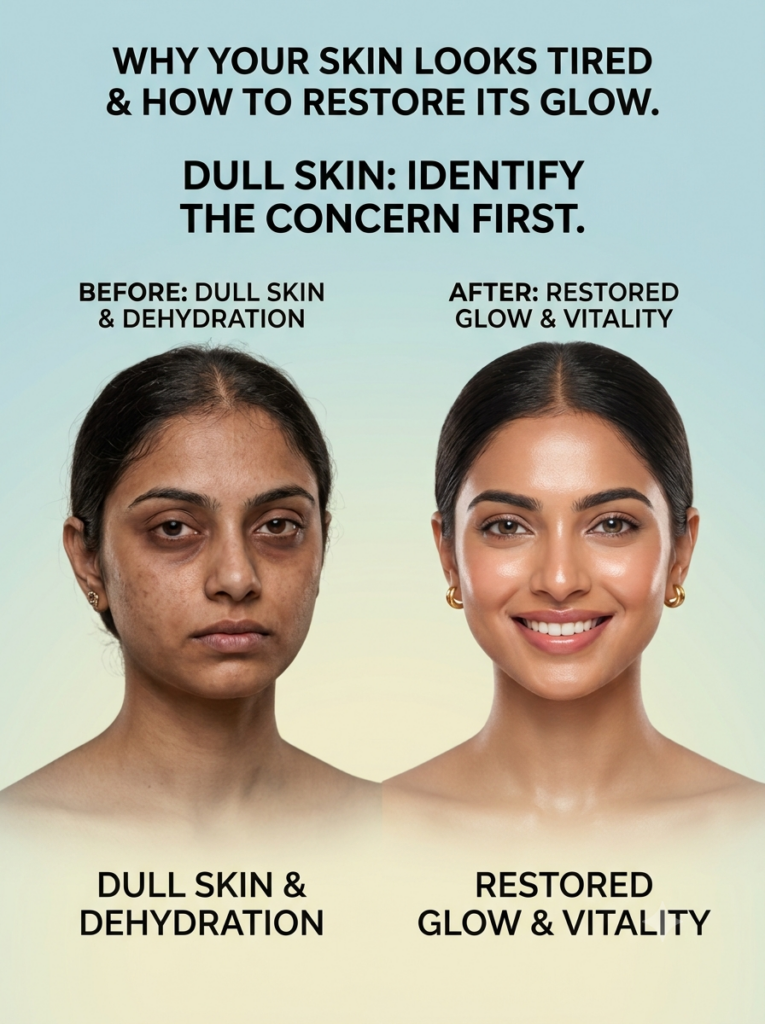
Why Your Skin Looks Tired & How to Restore Its Glow

Dull Skin: Why Your Skin Looks Tired & How to Restore Its Glow is best approached by understanding the skin concern first. Skin can be oily, dry, dehydrated, sensitive, pigmented, dull or showing signs of ageing, and one routine is unlikely to suit every combination.

A simple skincare framework is cleanse, treat, moisturise and protect. The exact products and order can change according to the concern, active ingredients and tolerance of your skin. More products do not automatically mean better results.

For acne-prone or oily skin, avoid the assumption that aggressive cleansing is always better. Over-cleansing can leave skin uncomfortable and may make a routine harder to tolerate. A balanced cleanser and appropriate hydration can be more practical.

For pigmentation and uneven tone, daily sun protection is foundational. Brightening or renewal products can be considered alongside sunscreen, but realistic expectations matter: pigmentation often changes gradually and persistent or changing lesions should be assessed by a dermatologist.

For dry, dehydrated or sensitive skin, barrier support becomes especially important. Hydrating ingredients, moisturisers and gentle cleansing can help maintain comfort. When using stronger actives, introducing them gradually and monitoring tolerance is sensible.

LookWell’s current catalogue includes skin products organised around concerns such as acne, ageing, brightening, dark circles, dehydration, lack of glow, oily skin, pigmentation, sensitive skin and dryness. That makes a concern-led editorial strategy especially useful for the eSHOP.

Skincare should be evidence-aware. Cosmetic products can support hydration, texture, radiance and the appearance of specific concerns, but they are not a substitute for diagnosis or medical treatment when a condition needs professional care.

A Practical Routine

  1. Cleanse without unnecessarily stripping the skin.
  2. Use one targeted serum or treatment that matches the main concern.
  3. Moisturise according to your skin’s hydration and barrier needs.
  4. Use broad-spectrum sunscreen during the day and reapply during prolonged outdoor exposure.
  5. Introduce new actives gradually and stop if persistent irritation develops.

Recommended LookWell Products

Who Should Seek Professional Advice?

Consider professional assessment when a concern is sudden, persistent, severe, painful, inflamed, rapidly worsening or associated with other unusual symptoms. The goal is to identify the cause instead of repeatedly changing products without a clear diagnosis.

FAQ

What is the first step for dull skin?

Start by identifying the specific concern and keeping the routine simple enough to monitor how your skin or hair responds.

How many products do I need?

Usually fewer well-chosen products are easier to use consistently than a large routine with overlapping functions.

Can professional products replace medical treatment?

No. They can support cosmetic care, but medical conditions require appropriate professional assessment and treatment.

CTA

Explore LookWell eSHOP and choose professional products according to your specific concern.

Posted on — Leave a comment

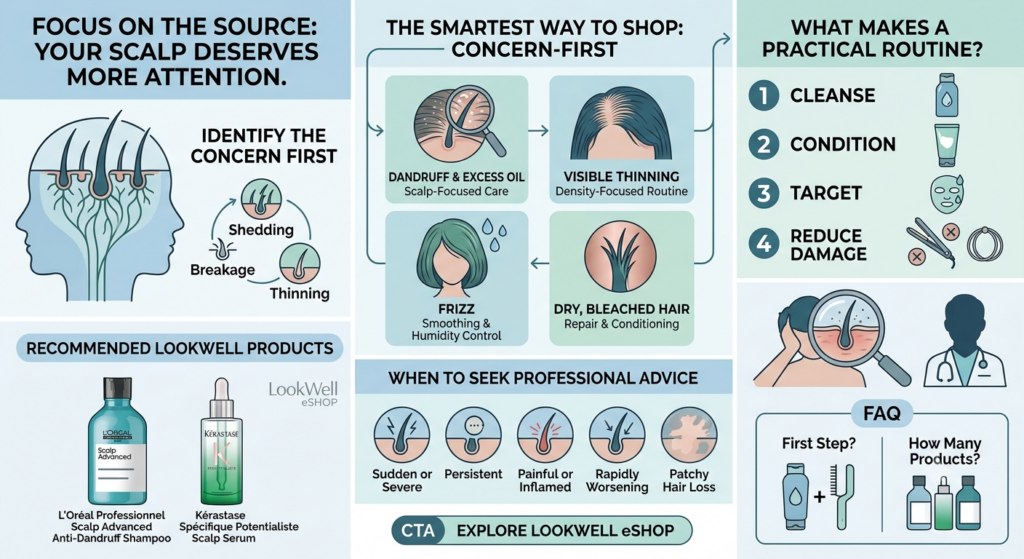
Why Your Scalp Deserves More Attention | LookWell

Why Your Scalp Deserves More Attention is a useful topic because hair concerns rarely have one universal cause. A good routine starts by identifying what is actually happening rather than choosing a product simply because it has a popular claim.

Hair shedding, hair breakage, thinning, scalp concerns and visible damage can look similar at first. Shedding describes hair leaving the follicle; breakage happens along the hair shaft; thinning describes reduced-looking density. The distinction matters because the most useful routine depends on the concern.

A practical hair routine usually has four parts: cleanse the scalp appropriately, condition the lengths, add a targeted treatment when it makes sense, and reduce avoidable damage. Heat, repeated chemical processing, rough handling and very tight hairstyles can all make fragile hair more vulnerable to breakage.

Scalp care deserves equal attention. Dandruff, excess oil and scalp sensitivity may require concern-specific care rather than a generic shampoo. If symptoms are persistent, severe or associated with sudden or patchy hair loss, professional evaluation is more appropriate than repeatedly changing cosmetic products.

The smartest way to shop is therefore concern-first. Someone with visible thinning may need a density-focused routine; someone with dandruff needs scalp-focused care; someone with bleached, dry hair may need repair and conditioning; and someone with frizz may benefit from smoothing and humidity-control products.

LookWell’s hair catalogue includes professional ranges covering concerns such as dandruff, frizz, coloured hair, dry hair, oily scalp, breakage, hair loss, thinning, straightened hair, keratin/cysteine care, damage and sensitive scalp. This makes the website suitable for a concern-based content strategy rather than a one-product-fits-all approach.

Use product directions as the primary guide for frequency and application. A cosmetic product can support the appearance and manageability of hair, but persistent or unexplained hair loss should not be treated as a simple shampoo problem.

A Practical Routine

  1. Choose shampoo according to scalp condition and hair needs.
  2. Condition the mid-lengths and ends to improve manageability.
  3. Use a targeted serum, mask or treatment when the concern calls for it.
  4. Reduce avoidable heat, chemical and mechanical stress.
  5. Monitor changes and seek professional advice for persistent, sudden or unusual problems.

Recommended LookWell Products

Who Should Seek Professional Advice?

Consider professional assessment when a concern is sudden, persistent, severe, painful, inflamed, rapidly worsening or associated with other unusual symptoms. The goal is to identify the cause instead of repeatedly changing products without a clear diagnosis.

FAQ

What is the first step for scalp care?

Start by identifying the specific concern and keeping the routine simple enough to monitor how your skin or hair responds.

How many products do I need?

Usually fewer well-chosen products are easier to use consistently than a large routine with overlapping functions.

Can professional products replace medical treatment?

No. They can support cosmetic care, but medical conditions require appropriate professional assessment and treatment.

CTA

Explore LookWell eSHOP and choose professional products according to your specific concern.

Posted on — Leave a comment

AHA, BHA & Exfoliation: What’s the Difference?

AHA, BHA & Exfoliation: What’s the Difference? is best approached by understanding the skin concern first. Skin can be oily, dry, dehydrated, sensitive, pigmented, dull or showing signs of ageing, and one routine is unlikely to suit every combination.

A simple skincare framework is cleanse, treat, moisturise and protect. The exact products and order can change according to the concern, active ingredients and tolerance of your skin. More products do not automatically mean better results.

For acne-prone or oily skin, avoid the assumption that aggressive cleansing is always better. Over-cleansing can leave skin uncomfortable and may make a routine harder to tolerate. A balanced cleanser and appropriate hydration can be more practical.

For pigmentation and uneven tone, daily sun protection is foundational. Brightening or renewal products can be considered alongside sunscreen, but realistic expectations matter: pigmentation often changes gradually and persistent or changing lesions should be assessed by a dermatologist.

For dry, dehydrated or sensitive skin, barrier support becomes especially important. Hydrating ingredients, moisturisers and gentle cleansing can help maintain comfort. When using stronger actives, introducing them gradually and monitoring tolerance is sensible.

LookWell’s current catalogue includes skin products organised around concerns such as acne, ageing, brightening, dark circles, dehydration, lack of glow, oily skin, pigmentation, sensitive skin and dryness. That makes a concern-led editorial strategy especially useful for the eSHOP.

Skincare should be evidence-aware. Cosmetic products can support hydration, texture, radiance and the appearance of specific concerns, but they are not a substitute for diagnosis or medical treatment when a condition needs professional care.

A Practical Routine

  1. Cleanse without unnecessarily stripping the skin.
  2. Use one targeted serum or treatment that matches the main concern.
  3. Moisturise according to your skin’s hydration and barrier needs.
  4. Use broad-spectrum sunscreen during the day and reapply during prolonged outdoor exposure.
  5. Introduce new actives gradually and stop if persistent irritation develops.

Recommended LookWell Products

Who Should Seek Professional Advice?

Consider professional assessment when a concern is sudden, persistent, severe, painful, inflamed, rapidly worsening or associated with other unusual symptoms. The goal is to identify the cause instead of repeatedly changing products without a clear diagnosis.

FAQ

What is the first step for AHA BHA exfoliation?

Start by identifying the specific concern and keeping the routine simple enough to monitor how your skin or hair responds.

How many products do I need?

Usually fewer well-chosen products are easier to use consistently than a large routine with overlapping functions.

Can professional products replace medical treatment?

No. They can support cosmetic care, but medical conditions require appropriate professional assessment and treatment.

CTA

Explore LookWell eSHOP and choose professional products according to your specific concern.

Posted on — Leave a comment

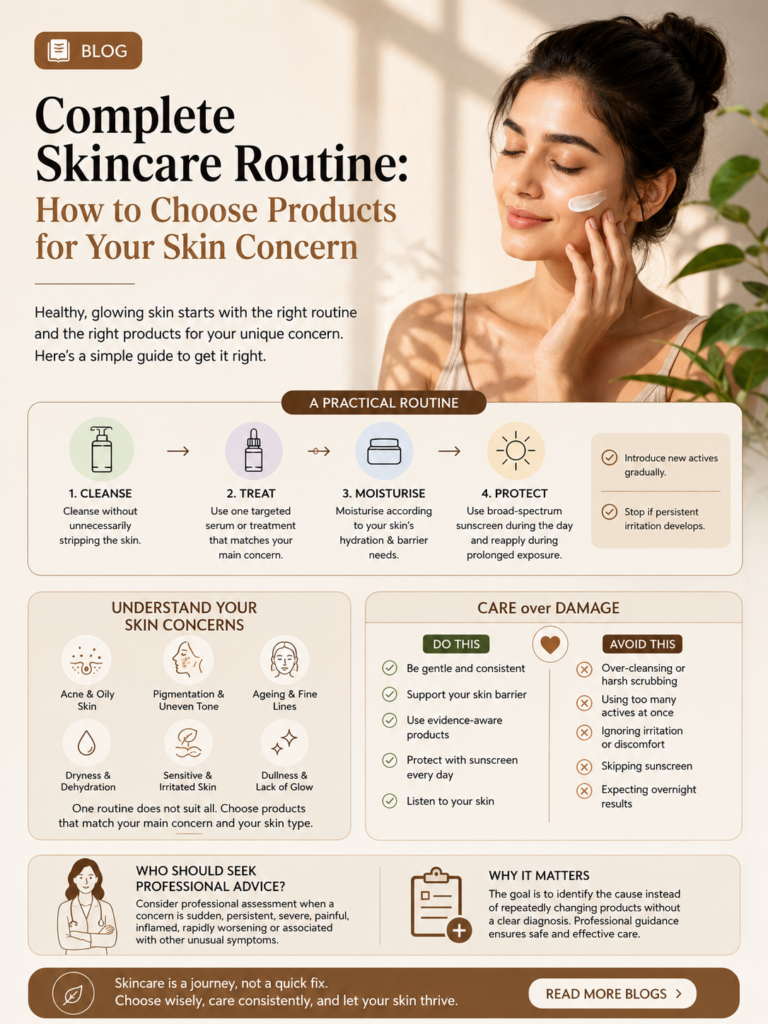
Complete Skincare Routine: How to Choose Products for Your Skin Concern

Complete Skincare Routine: How to Choose Products for Your Skin Concern is best approached by understanding the skin concern first. Skin can be oily, dry, dehydrated, sensitive, pigmented, dull or showing signs of ageing, and one routine is unlikely to suit every combination.

A simple skincare framework is cleanse, treat, moisturise and protect. The exact products and order can change according to the concern, active ingredients and tolerance of your skin. More products do not automatically mean better results.

For acne-prone or oily skin, avoid the assumption that aggressive cleansing is always better. Over-cleansing can leave skin uncomfortable and may make a routine harder to tolerate. A balanced cleanser and appropriate hydration can be more practical.

For pigmentation and uneven tone, daily sun protection is foundational. Brightening or renewal products can be considered alongside sunscreen, but realistic expectations matter: pigmentation often changes gradually and persistent or changing lesions should be assessed by a dermatologist.

For dry, dehydrated or sensitive skin, barrier support becomes especially important. Hydrating ingredients, moisturisers and gentle cleansing can help maintain comfort. When using stronger actives, introducing them gradually and monitoring tolerance is sensible.

LookWell’s current catalogue includes skin products organised around concerns such as acne, ageing, brightening, dark circles, dehydration, lack of glow, oily skin, pigmentation, sensitive skin and dryness. That makes a concern-led editorial strategy especially useful for the eSHOP.

Skincare should be evidence-aware. Cosmetic products can support hydration, texture, radiance and the appearance of specific concerns, but they are not a substitute for diagnosis or medical treatment when a condition needs professional care.

A Practical Routine

  1. Cleanse without unnecessarily stripping the skin.
  2. Use one targeted serum or treatment that matches the main concern.
  3. Moisturise according to your skin’s hydration and barrier needs.
  4. Use broad-spectrum sunscreen during the day and reapply during prolonged outdoor exposure.
  5. Introduce new actives gradually and stop if persistent irritation develops.

Recommended LookWell Products

Who Should Seek Professional Advice?

Consider professional assessment when a concern is sudden, persistent, severe, painful, inflamed, rapidly worsening or associated with other unusual symptoms. The goal is to identify the cause instead of repeatedly changing products without a clear diagnosis.

FAQ

What is the first step for complete skincare routine?

Start by identifying the specific concern and keeping the routine simple enough to monitor how your skin or hair responds.

How many products do I need?

Usually fewer well-chosen products are easier to use consistently than a large routine with overlapping functions.

Can professional products replace medical treatment?

No. They can support cosmetic care, but medical conditions require appropriate professional assessment and treatment.

CTA

Explore LookWell eSHOP and choose professional products according to your specific concern.

Posted on — Leave a comment

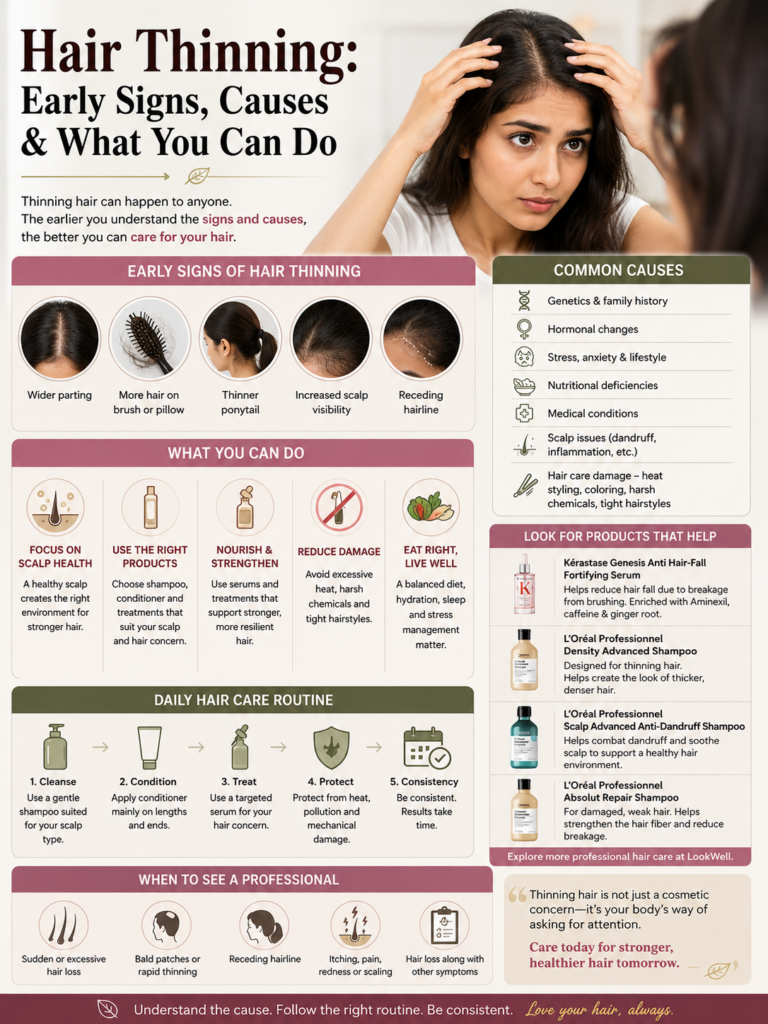
Hair Thinning: Early Signs, Causes & What You Can Do

Hair Thinning: Early Signs, Causes & What You Can Do is a useful topic because hair concerns rarely have one universal cause. A good routine starts by identifying what is actually happening rather than choosing a product simply because it has a popular claim.

Hair shedding, hair breakage, thinning, scalp concerns and visible damage can look similar at first. Shedding describes hair leaving the follicle; breakage happens along the hair shaft; thinning describes reduced-looking density. The distinction matters because the most useful routine depends on the concern.

A practical hair routine usually has four parts: cleanse the scalp appropriately, condition the lengths, add a targeted treatment when it makes sense, and reduce avoidable damage. Heat, repeated chemical processing, rough handling and very tight hairstyles can all make fragile hair more vulnerable to breakage.

Scalp care deserves equal attention. Dandruff, excess oil and scalp sensitivity may require concern-specific care rather than a generic shampoo. If symptoms are persistent, severe or associated with sudden or patchy hair loss, professional evaluation is more appropriate than repeatedly changing cosmetic products.

The smartest way to shop is therefore concern-first. Someone with visible thinning may need a density-focused routine; someone with dandruff needs scalp-focused care; someone with bleached, dry hair may need repair and conditioning; and someone with frizz may benefit from smoothing and humidity-control products.

LookWell’s hair catalogue includes professional ranges covering concerns such as dandruff, frizz, coloured hair, dry hair, oily scalp, breakage, hair loss, thinning, straightened hair, keratin/cysteine care, damage and sensitive scalp. This makes the website suitable for a concern-based content strategy rather than a one-product-fits-all approach.

Use product directions as the primary guide for frequency and application. A cosmetic product can support the appearance and manageability of hair, but persistent or unexplained hair loss should not be treated as a simple shampoo problem.

A Practical Routine

  1. Choose shampoo according to scalp condition and hair needs.
  2. Condition the mid-lengths and ends to improve manageability.
  3. Use a targeted serum, mask or treatment when the concern calls for it.
  4. Reduce avoidable heat, chemical and mechanical stress.
  5. Monitor changes and seek professional advice for persistent, sudden or unusual problems.

Recommended LookWell Products

Who Should Seek Professional Advice?

Consider professional assessment when a concern is sudden, persistent, severe, painful, inflamed, rapidly worsening or associated with other unusual symptoms. The goal is to identify the cause instead of repeatedly changing products without a clear diagnosis.

FAQ

What is the first step for hair thinning?

Start by identifying the specific concern and keeping the routine simple enough to monitor how your skin or hair responds.

How many products do I need?

Usually fewer well-chosen products are easier to use consistently than a large routine with overlapping functions.

Can professional products replace medical treatment?

No. They can support cosmetic care, but medical conditions require appropriate professional assessment and treatment.

CTA

Explore LookWell eSHOP and choose professional products according to your specific concern.

Posted on — Leave a comment

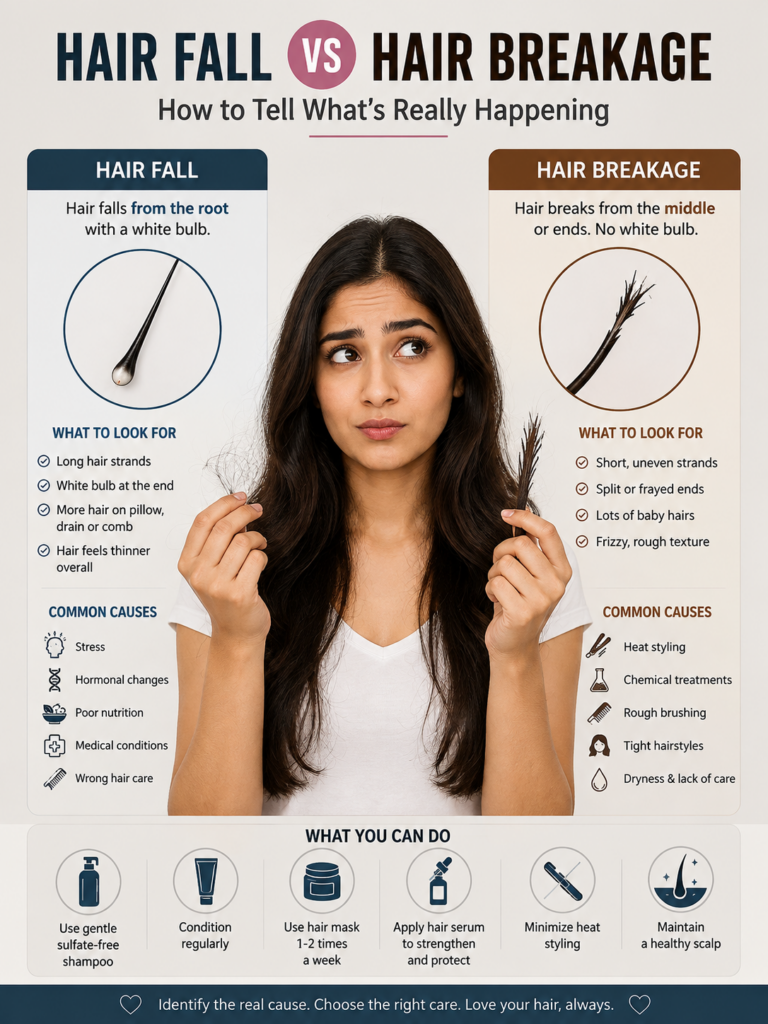
Hair Fall vs Hair Breakage: How to Tell What’s Really Happening

Hair Fall vs Hair Breakage: How to Tell What’s Really Happening is a useful topic because hair concerns rarely have one universal cause. A good routine starts by identifying what is actually happening rather than choosing a product simply because it has a popular claim.

Hair shedding, hair breakage, thinning, scalp concerns and visible damage can look similar at first. Shedding describes hair leaving the follicle; breakage happens along the hair shaft; thinning describes reduced-looking density. The distinction matters because the most useful routine depends on the concern.

A practical hair routine usually has four parts: cleanse the scalp appropriately, condition the lengths, add a targeted treatment when it makes sense, and reduce avoidable damage. Heat, repeated chemical processing, rough handling and very tight hairstyles can all make fragile hair more vulnerable to breakage.

Scalp care deserves equal attention. Dandruff, excess oil and scalp sensitivity may require concern-specific care rather than a generic shampoo. If symptoms are persistent, severe or associated with sudden or patchy hair loss, professional evaluation is more appropriate than repeatedly changing cosmetic products.

The smartest way to shop is therefore concern-first. Someone with visible thinning may need a density-focused routine; someone with dandruff needs scalp-focused care; someone with bleached, dry hair may need repair and conditioning; and someone with frizz may benefit from smoothing and humidity-control products.

LookWell’s hair catalogue includes professional ranges covering concerns such as dandruff, frizz, coloured hair, dry hair, oily scalp, breakage, hair loss, thinning, straightened hair, keratin/cysteine care, damage and sensitive scalp. This makes the website suitable for a concern-based content strategy rather than a one-product-fits-all approach.

Use product directions as the primary guide for frequency and application. A cosmetic product can support the appearance and manageability of hair, but persistent or unexplained hair loss should not be treated as a simple shampoo problem.

A Practical Routine

  1. Choose shampoo according to scalp condition and hair needs.
  2. Condition the mid-lengths and ends to improve manageability.
  3. Use a targeted serum, mask or treatment when the concern calls for it.
  4. Reduce avoidable heat, chemical and mechanical stress.
  5. Monitor changes and seek professional advice for persistent, sudden or unusual problems.

Recommended LookWell Products

Who Should Seek Professional Advice?

Consider professional assessment when a concern is sudden, persistent, severe, painful, inflamed, rapidly worsening or associated with other unusual symptoms. The goal is to identify the cause instead of repeatedly changing products without a clear diagnosis.

FAQ

What is the first step for hair fall vs hair breakage?

Start by identifying the specific concern and keeping the routine simple enough to monitor how your skin or hair responds.

How many products do I need?

Usually fewer well-chosen products are easier to use consistently than a large routine with overlapping functions.

Can professional products replace medical treatment?

No. They can support cosmetic care, but medical conditions require appropriate professional assessment and treatment.

CTA

Explore LookWell eSHOP and choose professional products according to your specific concern