Posted on Leave a comment

AHA, BHA & Exfoliation: What’s the Difference?

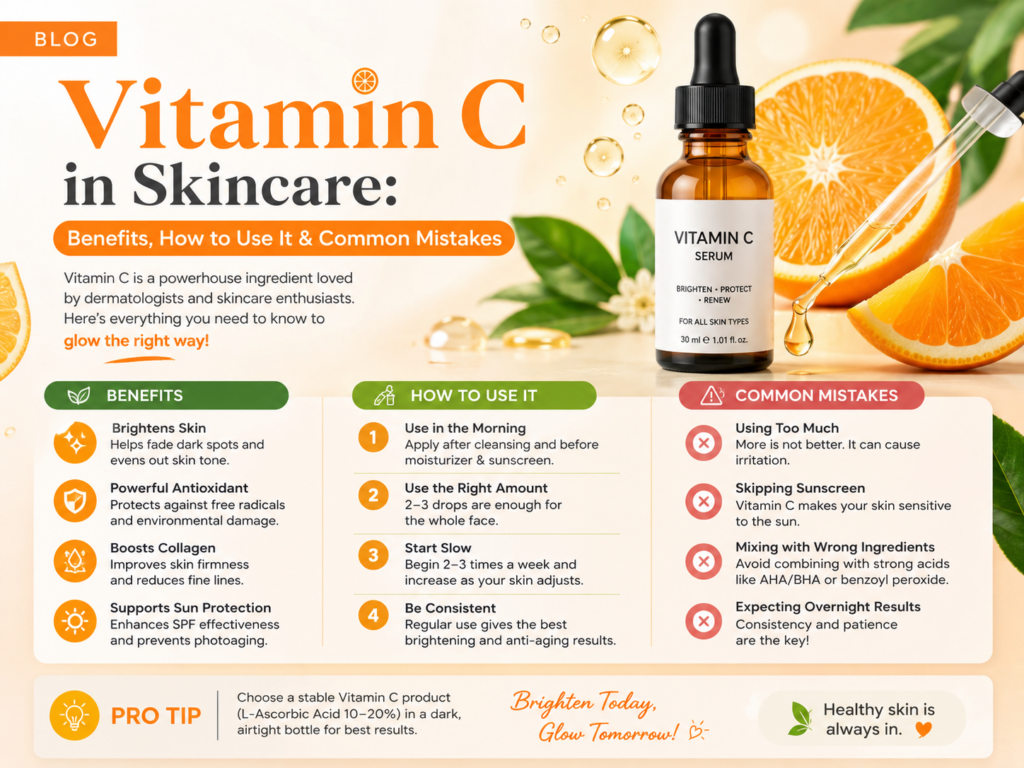
AHA, BHA & Exfoliation: What’s the Difference? is best approached by understanding the skin concern first. Skin can be oily, dry, dehydrated, sensitive, pigmented, dull or showing signs of ageing, and one routine is unlikely to suit every combination.

A simple skincare framework is cleanse, treat, moisturise and protect. The exact products and order can change according to the concern, active ingredients and tolerance of your skin. More products do not automatically mean better results.

For acne-prone or oily skin, avoid the assumption that aggressive cleansing is always better. Over-cleansing can leave skin uncomfortable and may make a routine harder to tolerate. A balanced cleanser and appropriate hydration can be more practical.

For pigmentation and uneven tone, daily sun protection is foundational. Brightening or renewal products can be considered alongside sunscreen, but realistic expectations matter: pigmentation often changes gradually and persistent or changing lesions should be assessed by a dermatologist.

For dry, dehydrated or sensitive skin, barrier support becomes especially important. Hydrating ingredients, moisturisers and gentle cleansing can help maintain comfort. When using stronger actives, introducing them gradually and monitoring tolerance is sensible.

LookWell’s current catalogue includes skin products organised around concerns such as acne, ageing, brightening, dark circles, dehydration, lack of glow, oily skin, pigmentation, sensitive skin and dryness. That makes a concern-led editorial strategy especially useful for the eSHOP.

Skincare should be evidence-aware. Cosmetic products can support hydration, texture, radiance and the appearance of specific concerns, but they are not a substitute for diagnosis or medical treatment when a condition needs professional care.

A Practical Routine

  1. Cleanse without unnecessarily stripping the skin.
  2. Use one targeted serum or treatment that matches the main concern.
  3. Moisturise according to your skin’s hydration and barrier needs.
  4. Use broad-spectrum sunscreen during the day and reapply during prolonged outdoor exposure.
  5. Introduce new actives gradually and stop if persistent irritation develops.

Recommended LookWell Products

Who Should Seek Professional Advice?

Consider professional assessment when a concern is sudden, persistent, severe, painful, inflamed, rapidly worsening or associated with other unusual symptoms. The goal is to identify the cause instead of repeatedly changing products without a clear diagnosis.

FAQ

What is the first step for AHA BHA exfoliation?

Start by identifying the specific concern and keeping the routine simple enough to monitor how your skin or hair responds.

How many products do I need?

Usually fewer well-chosen products are easier to use consistently than a large routine with overlapping functions.

Can professional products replace medical treatment?

No. They can support cosmetic care, but medical conditions require appropriate professional assessment and treatment.

CTA

Explore LookWell eSHOP and choose professional products according to your specific concern.

Posted on Leave a comment

Complete Skincare Routine: How to Choose Products for Your Skin Concern

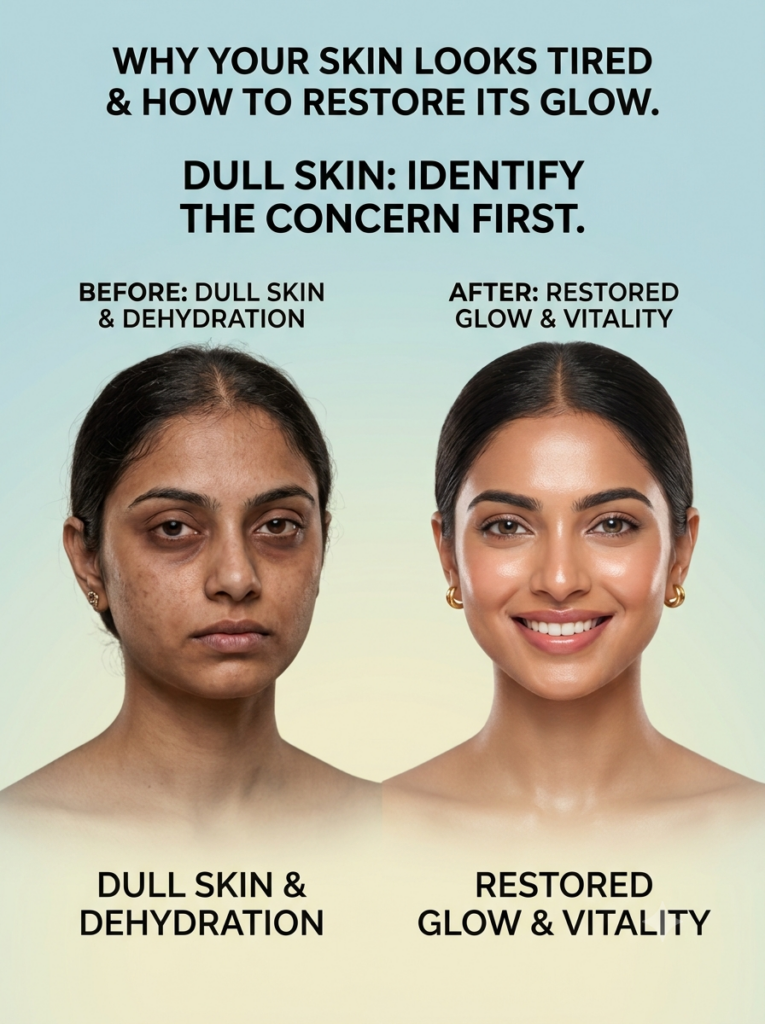
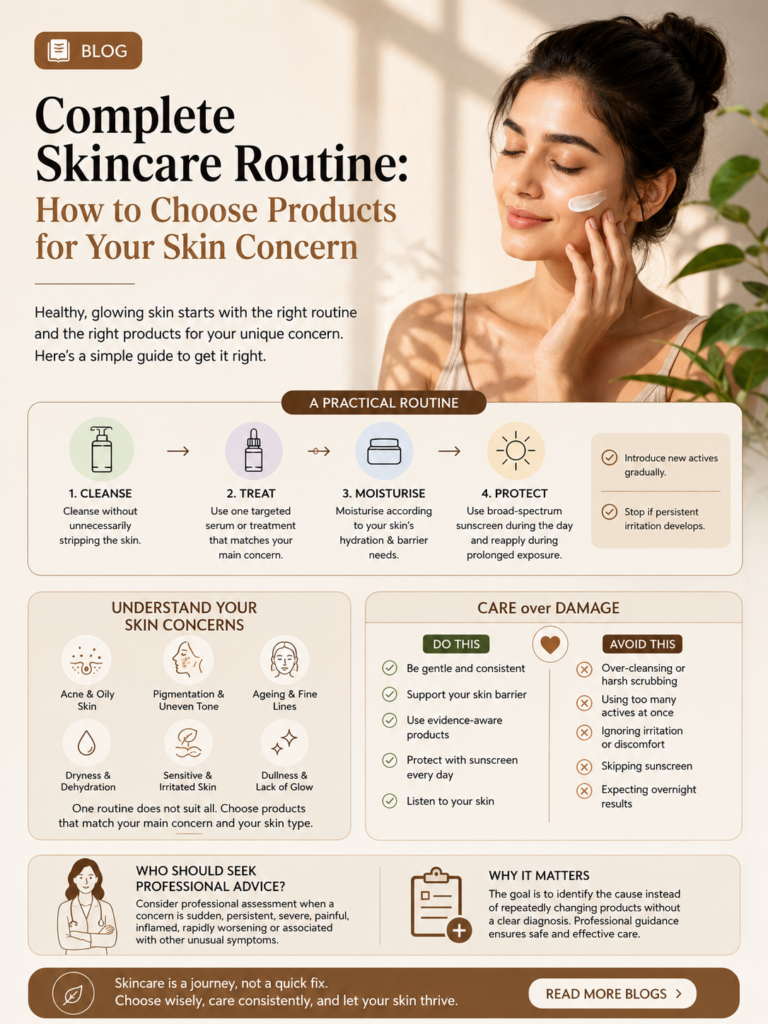
Complete Skincare Routine: How to Choose Products for Your Skin Concern is best approached by understanding the skin concern first. Skin can be oily, dry, dehydrated, sensitive, pigmented, dull or showing signs of ageing, and one routine is unlikely to suit every combination.

A simple skincare framework is cleanse, treat, moisturise and protect. The exact products and order can change according to the concern, active ingredients and tolerance of your skin. More products do not automatically mean better results.

For acne-prone or oily skin, avoid the assumption that aggressive cleansing is always better. Over-cleansing can leave skin uncomfortable and may make a routine harder to tolerate. A balanced cleanser and appropriate hydration can be more practical.

For pigmentation and uneven tone, daily sun protection is foundational. Brightening or renewal products can be considered alongside sunscreen, but realistic expectations matter: pigmentation often changes gradually and persistent or changing lesions should be assessed by a dermatologist.

For dry, dehydrated or sensitive skin, barrier support becomes especially important. Hydrating ingredients, moisturisers and gentle cleansing can help maintain comfort. When using stronger actives, introducing them gradually and monitoring tolerance is sensible.

LookWell’s current catalogue includes skin products organised around concerns such as acne, ageing, brightening, dark circles, dehydration, lack of glow, oily skin, pigmentation, sensitive skin and dryness. That makes a concern-led editorial strategy especially useful for the eSHOP.

Skincare should be evidence-aware. Cosmetic products can support hydration, texture, radiance and the appearance of specific concerns, but they are not a substitute for diagnosis or medical treatment when a condition needs professional care.

A Practical Routine

  1. Cleanse without unnecessarily stripping the skin.
  2. Use one targeted serum or treatment that matches the main concern.
  3. Moisturise according to your skin’s hydration and barrier needs.
  4. Use broad-spectrum sunscreen during the day and reapply during prolonged outdoor exposure.
  5. Introduce new actives gradually and stop if persistent irritation develops.

Recommended LookWell Products

Who Should Seek Professional Advice?

Consider professional assessment when a concern is sudden, persistent, severe, painful, inflamed, rapidly worsening or associated with other unusual symptoms. The goal is to identify the cause instead of repeatedly changing products without a clear diagnosis.

FAQ

What is the first step for complete skincare routine?

Start by identifying the specific concern and keeping the routine simple enough to monitor how your skin or hair responds.

How many products do I need?

Usually fewer well-chosen products are easier to use consistently than a large routine with overlapping functions.

Can professional products replace medical treatment?

No. They can support cosmetic care, but medical conditions require appropriate professional assessment and treatment.

CTA

Explore LookWell eSHOP and choose professional products according to your specific concern.

Posted on Leave a comment

Hair Thinning: Early Signs, Causes & What You Can Do

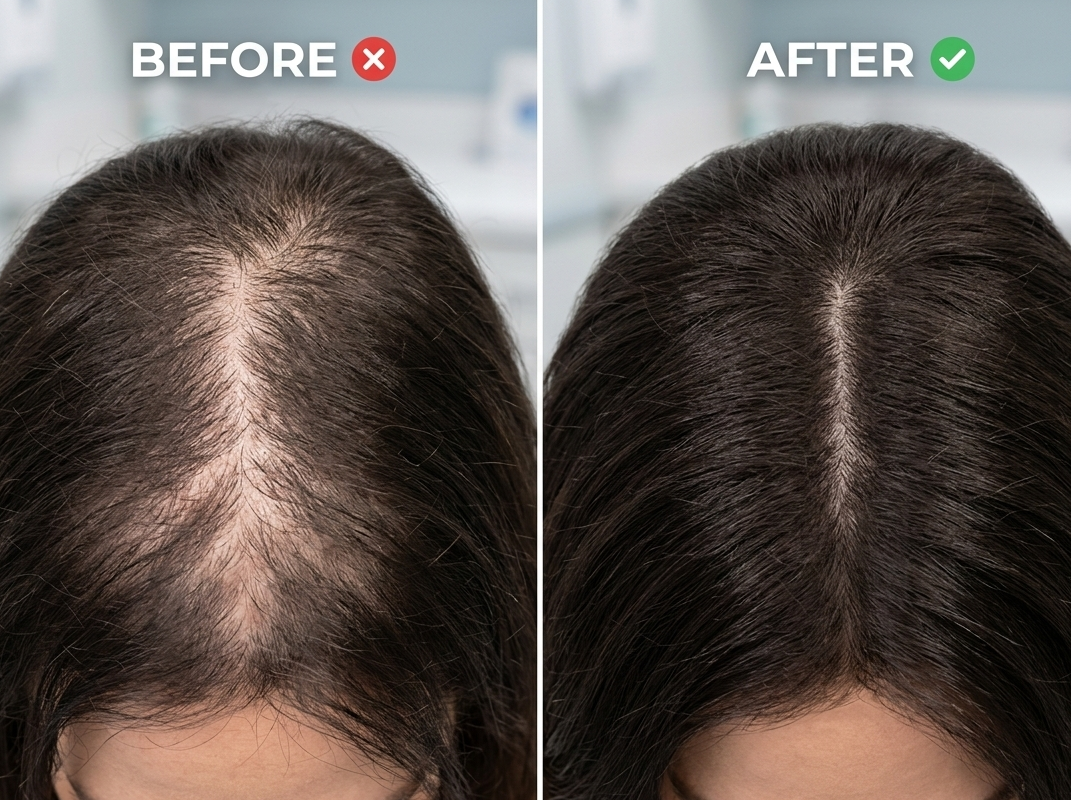
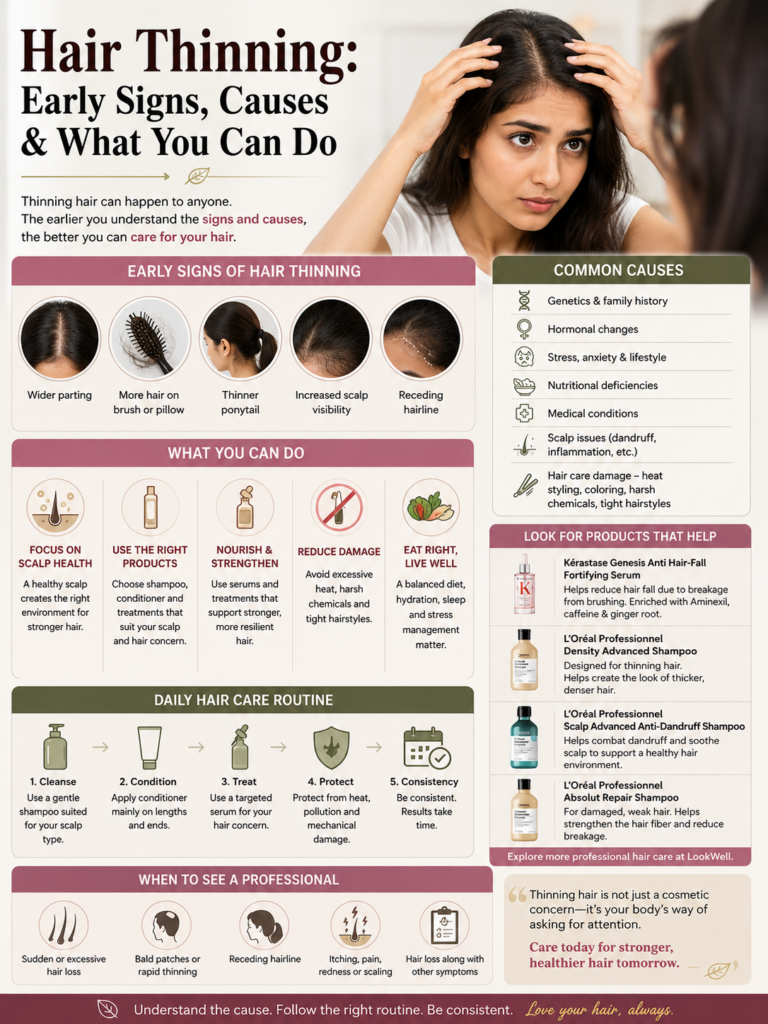
Hair Thinning: Early Signs, Causes & What You Can Do is a useful topic because hair concerns rarely have one universal cause. A good routine starts by identifying what is actually happening rather than choosing a product simply because it has a popular claim.

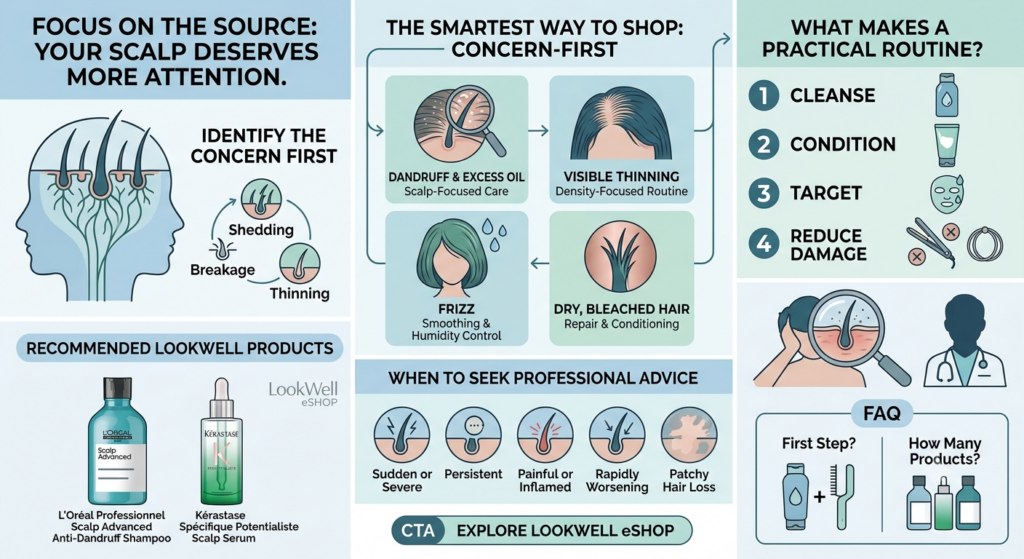
Hair shedding, hair breakage, thinning, scalp concerns and visible damage can look similar at first. Shedding describes hair leaving the follicle; breakage happens along the hair shaft; thinning describes reduced-looking density. The distinction matters because the most useful routine depends on the concern.

A practical hair routine usually has four parts: cleanse the scalp appropriately, condition the lengths, add a targeted treatment when it makes sense, and reduce avoidable damage. Heat, repeated chemical processing, rough handling and very tight hairstyles can all make fragile hair more vulnerable to breakage.

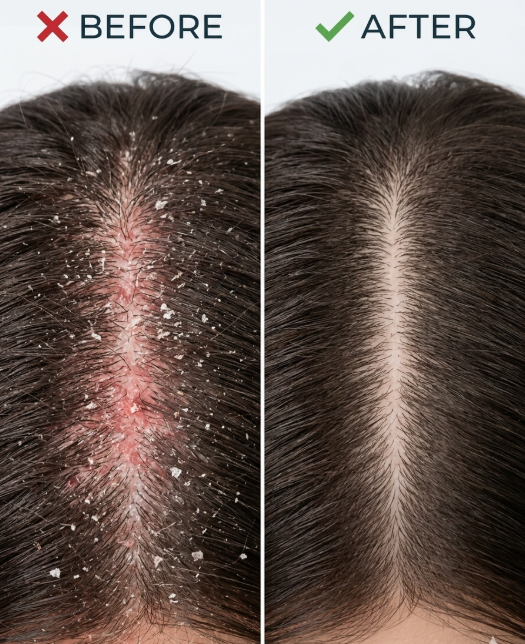
Scalp care deserves equal attention. Dandruff, excess oil and scalp sensitivity may require concern-specific care rather than a generic shampoo. If symptoms are persistent, severe or associated with sudden or patchy hair loss, professional evaluation is more appropriate than repeatedly changing cosmetic products.

The smartest way to shop is therefore concern-first. Someone with visible thinning may need a density-focused routine; someone with dandruff needs scalp-focused care; someone with bleached, dry hair may need repair and conditioning; and someone with frizz may benefit from smoothing and humidity-control products.

LookWell’s hair catalogue includes professional ranges covering concerns such as dandruff, frizz, coloured hair, dry hair, oily scalp, breakage, hair loss, thinning, straightened hair, keratin/cysteine care, damage and sensitive scalp. This makes the website suitable for a concern-based content strategy rather than a one-product-fits-all approach.

Use product directions as the primary guide for frequency and application. A cosmetic product can support the appearance and manageability of hair, but persistent or unexplained hair loss should not be treated as a simple shampoo problem.

A Practical Routine

  1. Choose shampoo according to scalp condition and hair needs.
  2. Condition the mid-lengths and ends to improve manageability.
  3. Use a targeted serum, mask or treatment when the concern calls for it.
  4. Reduce avoidable heat, chemical and mechanical stress.
  5. Monitor changes and seek professional advice for persistent, sudden or unusual problems.

Recommended LookWell Products

Who Should Seek Professional Advice?

Consider professional assessment when a concern is sudden, persistent, severe, painful, inflamed, rapidly worsening or associated with other unusual symptoms. The goal is to identify the cause instead of repeatedly changing products without a clear diagnosis.

FAQ

What is the first step for hair thinning?

Start by identifying the specific concern and keeping the routine simple enough to monitor how your skin or hair responds.

How many products do I need?

Usually fewer well-chosen products are easier to use consistently than a large routine with overlapping functions.

Can professional products replace medical treatment?

No. They can support cosmetic care, but medical conditions require appropriate professional assessment and treatment.

CTA

Explore LookWell eSHOP and choose professional products according to your specific concern.

Posted on Leave a comment

Hair Fall vs Hair Breakage: How to Tell What’s Really Happening

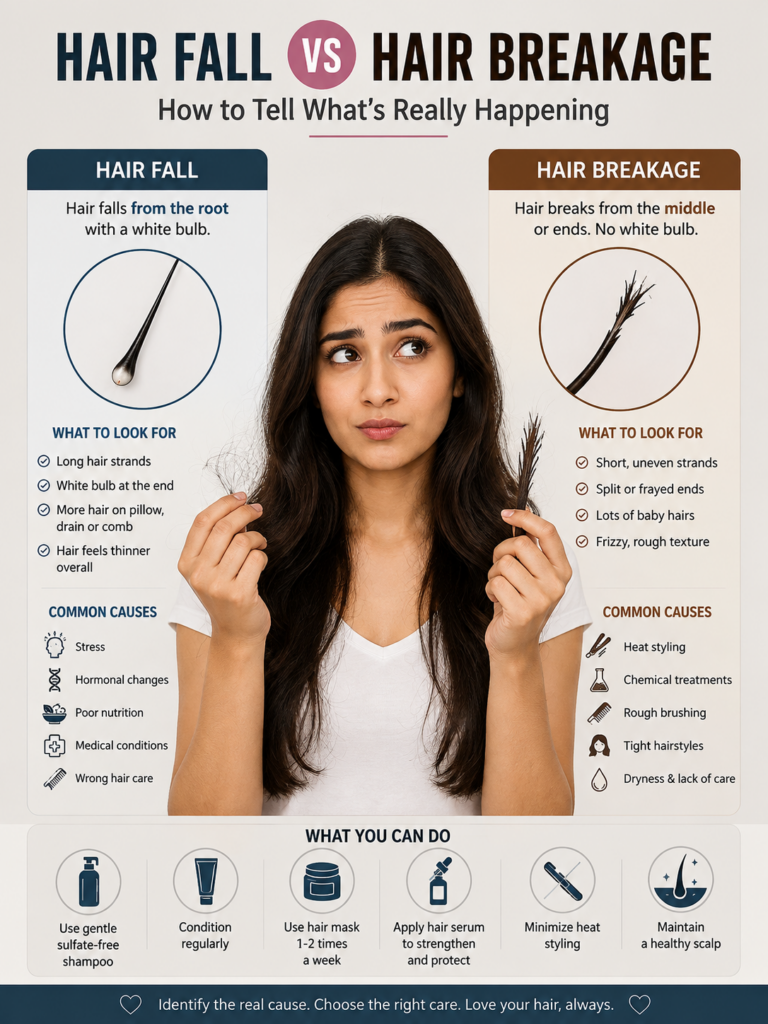
Hair Fall vs Hair Breakage: How to Tell What’s Really Happening is a useful topic because hair concerns rarely have one universal cause. A good routine starts by identifying what is actually happening rather than choosing a product simply because it has a popular claim.

Hair shedding, hair breakage, thinning, scalp concerns and visible damage can look similar at first. Shedding describes hair leaving the follicle; breakage happens along the hair shaft; thinning describes reduced-looking density. The distinction matters because the most useful routine depends on the concern.

A practical hair routine usually has four parts: cleanse the scalp appropriately, condition the lengths, add a targeted treatment when it makes sense, and reduce avoidable damage. Heat, repeated chemical processing, rough handling and very tight hairstyles can all make fragile hair more vulnerable to breakage.

Scalp care deserves equal attention. Dandruff, excess oil and scalp sensitivity may require concern-specific care rather than a generic shampoo. If symptoms are persistent, severe or associated with sudden or patchy hair loss, professional evaluation is more appropriate than repeatedly changing cosmetic products.

The smartest way to shop is therefore concern-first. Someone with visible thinning may need a density-focused routine; someone with dandruff needs scalp-focused care; someone with bleached, dry hair may need repair and conditioning; and someone with frizz may benefit from smoothing and humidity-control products.

LookWell’s hair catalogue includes professional ranges covering concerns such as dandruff, frizz, coloured hair, dry hair, oily scalp, breakage, hair loss, thinning, straightened hair, keratin/cysteine care, damage and sensitive scalp. This makes the website suitable for a concern-based content strategy rather than a one-product-fits-all approach.

Use product directions as the primary guide for frequency and application. A cosmetic product can support the appearance and manageability of hair, but persistent or unexplained hair loss should not be treated as a simple shampoo problem.

A Practical Routine

  1. Choose shampoo according to scalp condition and hair needs.
  2. Condition the mid-lengths and ends to improve manageability.
  3. Use a targeted serum, mask or treatment when the concern calls for it.
  4. Reduce avoidable heat, chemical and mechanical stress.
  5. Monitor changes and seek professional advice for persistent, sudden or unusual problems.

Recommended LookWell Products

Who Should Seek Professional Advice?

Consider professional assessment when a concern is sudden, persistent, severe, painful, inflamed, rapidly worsening or associated with other unusual symptoms. The goal is to identify the cause instead of repeatedly changing products without a clear diagnosis.

FAQ

What is the first step for hair fall vs hair breakage?

Start by identifying the specific concern and keeping the routine simple enough to monitor how your skin or hair responds.

How many products do I need?

Usually fewer well-chosen products are easier to use consistently than a large routine with overlapping functions.

Can professional products replace medical treatment?

No. They can support cosmetic care, but medical conditions require appropriate professional assessment and treatment.

CTA

Explore LookWell eSHOP and choose professional products according to your specific concern

Posted on Leave a comment

Hair Fall: Causes, Scalp Care & a Science-Based Hair Care Routine

Hair Fall: Causes, Scalp Care & a Science-Based Hair Care Routine is a useful topic because hair concerns rarely have one universal cause. A good routine starts by identifying what is actually happening rather than choosing a product simply because it has a popular claim.

Hair shedding, hair breakage, thinning, scalp concerns and visible damage can look similar at first. Shedding describes hair leaving the follicle; breakage happens along the hair shaft; thinning describes reduced-looking density. The distinction matters because the most useful routine depends on the concern.

A practical hair routine usually has four parts: cleanse the scalp appropriately, condition the lengths, add a targeted treatment when it makes sense, and reduce avoidable damage. Heat, repeated chemical processing, rough handling and very tight hairstyles can all make fragile hair more vulnerable to breakage.

Scalp care deserves equal attention. Dandruff, excess oil and scalp sensitivity may require concern-specific care rather than a generic shampoo. If symptoms are persistent, severe or associated with sudden or patchy hair loss, professional evaluation is more appropriate than repeatedly changing cosmetic products.

The smartest way to shop is therefore concern-first. Someone with visible thinning may need a density-focused routine; someone with dandruff needs scalp-focused care; someone with bleached, dry hair may need repair and conditioning; and someone with frizz may benefit from smoothing and humidity-control products.

LookWell’s hair catalogue includes professional ranges covering concerns such as dandruff, frizz, coloured hair, dry hair, oily scalp, breakage, hair loss, thinning, straightened hair, keratin/cysteine care, damage and sensitive scalp. This makes the website suitable for a concern-based content strategy rather than a one-product-fits-all approach.

Use product directions as the primary guide for frequency and application. A cosmetic product can support the appearance and manageability of hair, but persistent or unexplained hair loss should not be treated as a simple shampoo problem.

A Practical Routine

  1. Choose shampoo according to scalp condition and hair needs.
  2. Condition the mid-lengths and ends to improve manageability.
  3. Use a targeted serum, mask or treatment when the concern calls for it.
  4. Reduce avoidable heat, chemical and mechanical stress.
  5. Monitor changes and seek professional advice for persistent, sudden or unusual problems.

Recommended LookWell Products

Who Should Seek Professional Advice?

Consider professional assessment when a concern is sudden, persistent, severe, painful, inflamed, rapidly worsening or associated with other unusual symptoms. The goal is to identify the cause instead of repeatedly changing products without a clear diagnosis.

FAQ

What is the first step for hair fall?

Start by identifying the specific concern and keeping the routine simple enough to monitor how your skin or hair responds.

How many products do I need?

Usually fewer well-chosen products are easier to use consistently than a large routine with overlapping functions.

Can professional products replace medical treatment?

No. They can support cosmetic care, but medical conditions require appropriate professional assessment and treatment.

CTA

Explore LookWell eSHOP and choose professional products according to your specific concern.